
The dose on the label is the dose in the study.
Supplements built to the exact amounts, forms and ratios clinical research actually used, and honest about what they can and can't do.
What brought you here?
Pick the closest one and the quiz starts there. Seven questions, about two minutes. You'll see which formula matches your pattern, and what it can't fix.
 My cycles are unpredictable
 The week before my period is rough
 Skin breakouts or facial hair changes
 I'm tired all the time
 Just curious what you'd say
Your result stays on the page. Email is optional, after.
Every formula, on the record.
The full dose, the exact form, and, plainly, what each one can't do. Tap through all four.

Women's health is confusing enough.
Between conflicting advice and big claims, it's hard to know what genuinely helps. So we make a small range of supplements you can trust and actually understand, properly dosed, simply explained, and honest about their limits. That's the whole idea.
One for each thing you're navigating.
Each is made for a single concern, so nothing is wasted and nothing is guesswork. You can reserve any of them now, and we'll set aside 40% off for you.
What we hold ourselves to.
Four rules, and what they look like next to a typical women's supplement.
- Every dose printed, at trial strength
- Bioavailable forms, dosed on actives
- Ingredients with human RCTs behind them
- Clear on what it can't do
- "Proprietary blend," doses hidden
- Cheapest forms (oxide, plain curcumin)
- Ayurvedic herbs with weak evidence
- Cure-and-balance promises, no limits stated
Why you won't find some familiar names here.
You'll see ingredients like ashwagandha, shatavari, or seed cycling in a lot of women's supplements, they carry long, respected histories, and many people find real comfort in them.
We've simply set ourselves one rule: we only include something when there's strong modern research showing it helps with the exact concern a product is for. For a few of these, that evidence isn't there yet, so we've left them out, with a great deal of respect. If the research grows, we'll gladly welcome them in.
"Natural" isn't a safety signal. Evidence is.
Why we left out ashwagandha. What we think of home remedies. And why "chemical" isn't the word most people think it is.
Read how we think →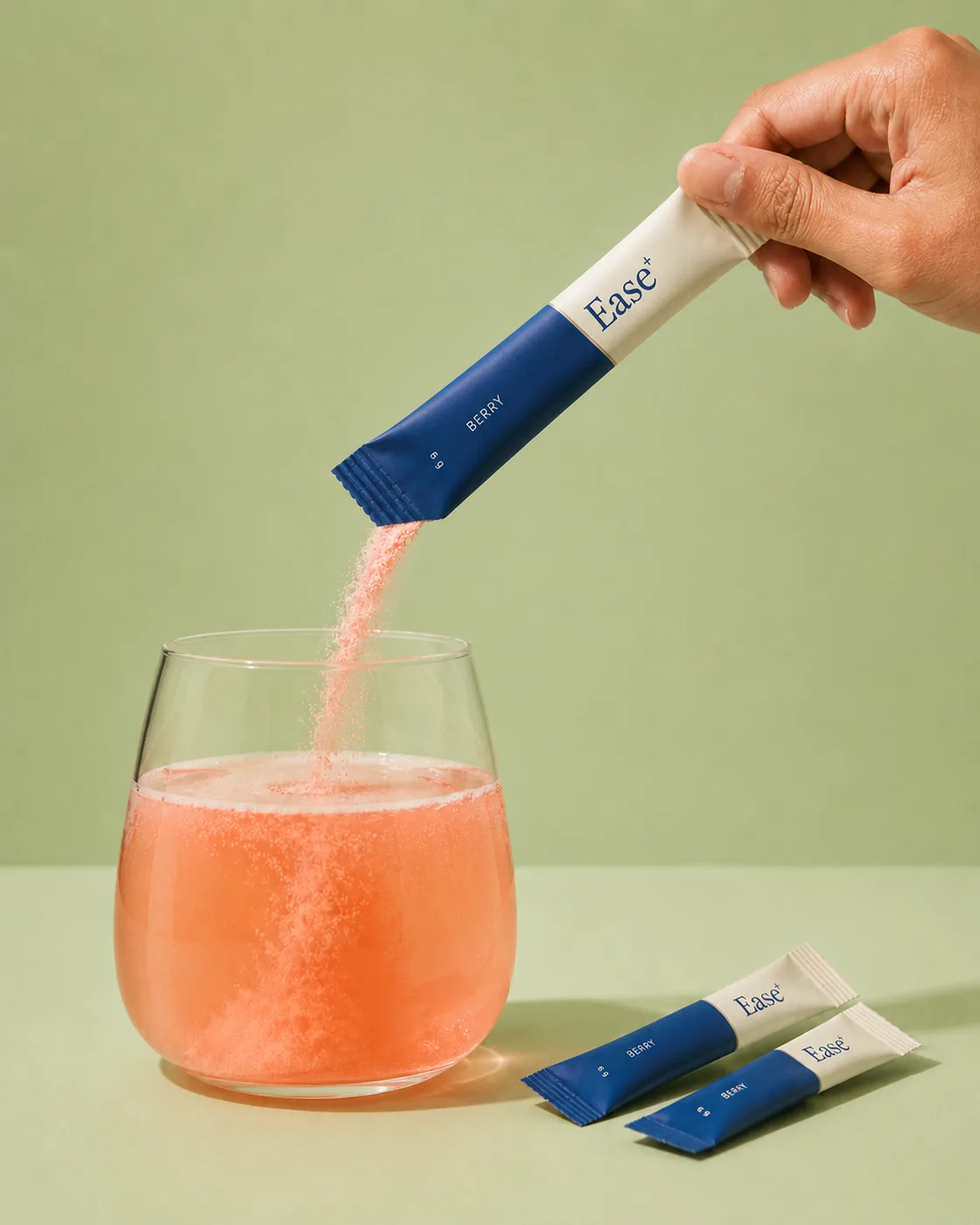

Reserve now, save 40%.
We're opening soon. Leave your email or phone and we'll set aside 40% off just for you, our way of thanking the people who believed early. We won't be able to offer it on launch.
- 40% off, only for early friends like you
- No payment today
- We'll let you know the day we open
You're on the list.
Your 40% off is saved. We'll reach out the day we open, thank you for being here early.
While you're here, a few questions about what's actually going on for you, so we build the right thing first. There's a free trial-pack combo waiting in your first order for it. Skip whatever you'd rather not answer.
That's saved.
Your trial-pack combo is on your first order. Thank you, this genuinely shapes what we make next.
Balance
A gentle cacao-vanilla blend built on the most-studied nutrients for PCOS. It supports steadier cycles and clearer skin, over a few months, with a lot of honesty about what it can do.
Four ingredients, and here's why each one.
Helps your body respond to insulin properly again, which is where a lot of PCOS begins. In studies, this amount improved cycle regularity over about three months. Many products use a tenth of it; we use the full 4 grams.
Paired with myo-inositol in the 40:1 balance your body naturally keeps. This matters more than it sounds: too much of it can work against you, so we hold the ratio the research points to, no more.
Low vitamin D is common with PCOS and can make things harder. A daily amount to keep you topped up, in the form your body uses best.
A whey peptide that helps the inositol actually get absorbed. Some people's bodies are slower at taking up inositol; this makes the difference, and it's the reason the dose works as well as the research says it should.
PCOS often begins with insulin, not with your body failing you.
When insulin runs high, the ovaries tend to make more androgens, which can bring acne, unwanted hair, and cycles that skip. Inositol simply helps your cells hear insulin properly again, so things can settle.
- Inositol helps hereInsulin highwhere it starts
- Ovariesmake androgens
- Androgens up
- Acne · hairskipped cycles
Gently, over a few months.
It works with time and consistency, not overnight.
Settling in
One cup a day. Not much to see yet. This is the groundwork. A little bloating early on is normal and passes.
Steadier cycles
For most people, cycles become more predictable, the change studies tend to show.
Skin, then hair
Skin usually eases first; unwanted hair is the slowest, simply because hair takes its time.
How to take it
- One scoop daily, any time, with or without food.
- Stir into warm milk, your coffee, or a smoothie, it's a soft cacao-vanilla, made to slip into a routine you already have.
- Give it a few months; that's how the studies were done.
- On diabetes medication? Do check with your doctor first.
A few honest notes
- It supports the metabolic side of PCOS. It doesn't cure it, and nothing truly does.
- It isn't a weight-loss product.
- It's a companion to your doctor and your tests, not a replacement.
Balance, answered.
It works on the same idea, helping your body use insulin, and in studies this amount of inositol improved cycle regularity, usually with an easier time on the stomach. It isn't a substitute for anything your doctor has prescribed. If metformin suits you, there's no need to switch; many people take inositol alongside it. Your doctor can help you decide.
Honestly, not much on its own. It supports the metabolic side of things, which can help a little, but it isn't a weight product. Weight in PCOS shifts mostly through food, movement, and sometimes medication.
Because with this one, more isn't better. Your body keeps roughly a 40:1 balance of the two inositols, and tipping in extra can gently work against you. So we hold that natural ratio on purpose.
We're opening soon. Reserve now and we'll save 40% off for you and let you know the day it's ready, no payment until then.
Why we're confident, and where the limits are
Myo-inositol, alone and combined with D-chiro-inositol at 40:1, is supported by multiple randomised trials and meta-analyses showing improved insulin sensitivity, ovulation and cycle regularity, and good tolerability. Effect sizes are meaningful but not dramatic, and response varies by PCOS type.
→ Myo-inositol / D-chiro-inositol 40:1 vs metformin · RCTs, 2019–2025
→ The 40:1 ratio & the "DCI paradox" · ovarian-quality studies, 2019–2021
Start balancing, with 40% off.
Reserve Balance and we'll set aside your early price of ₹539. No payment now, just a heads-up when we open.
Thoughts & questions
Leave a thought, question, or your experience. We read everything.
Leave a thought
Ease
A soft wild-berry evening drink built on the two minerals with the kindest evidence for PMS, with vitamin B6 and saffron for mood and calm. A lighter week, by your second or third cycle.
Two minerals, vitamin B6, and saffron.
Four ingredients that have the most evidence for PMS. Each one here for a reason, at an amount that's actually studied.
The nutrient with the kindest, most consistent evidence for easing PMS. We use an easily-absorbing form, in an amount your body can take up well.
Helps with the bloating and the low mood, and it's quietly calming before sleep. We use a well-absorbing form, not the cheap one that often does very little.
A supporting cofactor for PMS, kept at a low, safe dose. The amounts some products use can be hard on nerves over time; we keep it well under that range, just enough to do its job.
Lovely evidence for the low, tearful side of PMS. Taken as a single evening dose, it's the botanical with the most consistent benefit for PMS mood in studies.
PMS isn't “too many hormones.” It's how your body rides the dip.
Before your period, hormones fall. That part is normal. But as they do, your body's calcium and magnesium tend to fall with them. Lower levels make nerves more reactive, muscles more tense, and mood harder to hold steady. Topping those up is one of the few things that reliably softens the week. Saffron then adds support for the mood side, where the drop is often felt most.
- Before periodhormones dip
- Ease tops up hereCa + Mg fallwith the hormones
- Nervesmore reactive
- Mood · crampsbloating
Every evening, not only the hard days.
Topping up
Minerals work by keeping you steady, so it's an every-evening thing, not just when it hits.
A lighter week
Most people feel a real drop in how heavy the week is, calmer mood, less bloat.
Steady
Kept up, the ease holds. It softens PMS; it won't erase it.
How to take it
- One sachet in water each evening, ideally with dinner.
- All month, not only during the PMS week.
- Not at the same time as Restore (iron); space them a couple of hours apart.
A few honest notes
- This is for everyday PMS. If your low feels overwhelming, please talk to a doctor, that deserves more support than a supplement.
- We keep vitamin B6 very low on purpose; the higher amounts some products use can be hard on nerves over time.
- Saffron isn't for pregnancy.
Ease, answered.
Most calcium supplements are designed for bone health, not PMS. Ease uses citrate (absorbs well with or without food), at the per-dose amount your gut can actually take up, paired with the other ingredients that matter for PMS specifically. It's a targeted formula, not a general top-up.
The pill changes your hormone cycle, but PMS symptoms can still happen on hormonal contraception. Calcium and magnesium are nutrients, not hormones. They work regardless. If your PMS is already very mild on the pill, the difference may be small; if it's still real, Ease is still relevant.
Saffron acts on serotonin, so if you're on an SSRI or SNRI, please ask your doctor before taking Ease. At 30 mg the risk is low, but serotonin interactions deserve a professional opinion, not a label.
All month, every evening, not just the PMS week. The minerals work by keeping levels consistently steady, not by a top-up right before symptoms hit. One sachet each evening is the rhythm.
Why we're confident, and where the limits are
Calcium has the strongest and most consistent evidence for PMS: a 1,057-person multi-centre RCT found a 48% reduction in total PMS symptom score on calcium vs 30% on placebo, over three cycles. Magnesium has several controlled trials supporting reductions in mood, water retention and cramping. Saffron at 30 mg/day has a specific RCT for PMS (50 women, significant reduction in total severity vs placebo). Vitamin B6 is supported by a 1999 BMJ meta-analysis of 13 RCTs. Effect sizes are meaningful for most people, but individual responses vary.
→ Fathizadeh et al., magnesium in PMS · Iran J Nurs Midwifery Res, 2010
→ Agha-Hosseini et al., saffron vs placebo for PMS · BJOG, 2008
→ Wyatt et al., meta-analysis, B6 for PMS · BMJ, 1999
A softer week, with 40% off.
Reserve Ease and we'll save your early price of ₹419. No payment now.
Thoughts & questions
Leave a thought, question, or your experience. We read everything.
Leave a thought
Clear
Two soft cups a day can lower the hormone that drives hormonal acne and unwanted hair, with zinc for skin. A kind, patient addition, lovely alongside Balance.
A tea with evidence, and a little zinc.
In studies with women, two cups a day lowered the hormone behind hormonal acne and unwanted hair. Modest, but genuinely researched, which is rare for a “hormone tea,” and the reason it's here.
Calming for skin, with some evidence for acne. A small, thoughtful amount, kept modest so it stays gentle over time.
The acne and the hair often share one cause.
When free testosterone runs a little high, oil glands produce more sebum and hair follicles respond, breakouts along the jaw and chin, hair where you'd rather not. Spearmint softens that signal at the source. Zinc then quiets the inflammatory response at the skin, easing what's driving both.
- Spearmint lowers thisFree testosteroneruns a little high
- Zinc quiets thisFollicles + oil glandsreact
- Hormonal acnejaw · chinUnwanted hairslow to reverse
The honest timeline. This one asks for patience.
Gentle shift
The hormone softens within about a month of two cups a day. You won't feel this part. It's quiet.
Skin follows
Breakouts usually ease before hair does, as skin renews faster.
Hair, slowly
Hair is the most patient of all, follicles take months. We'd rather tell you than let you feel let down.
How to take it
- Steep one cup, twice a day, morning and evening.
- Take the zinc capsule with food.
- Lovely paired with Balance, for the fuller picture.
A few honest notes
- This is a helper, not a stand-alone acne cure. It nudges the hormone; it won't replace skincare or a dermatologist.
- Skin and hair change over months, not weeks.
- Please skip it if you're pregnant or trying to conceive.
Clear, answered.
Free testosterone starts to shift within about 30 days of two cups a day. Skin tends to follow at 2–3 months, because skin cells turn over relatively quickly. Hair is the slowest, follicles work on a 3–6 month rhythm, sometimes longer. Skin first, hair much later; this one genuinely asks for patience.
Yes, and it often makes sense. PCOS is commonly behind both. Inositol (Balance) helps from the insulin sensitivity side; spearmint (Clear) lowers free testosterone more directly. They work on different pathways and pair naturally together.
Hormonal acne tends to cluster on the jaw, chin and lower cheeks, and typically worsens in the week before your period. If that sounds familiar, there's a good chance it's androgen-driven. A dermatologist or GP can confirm if you're unsure.
Two cups of spearmint tea a day and 15 mg of zinc bisglycinate are both gentle at these levels and considered safe for long-term use. Zinc has an upper daily limit of 40 mg. We sit at 15 mg, well within range. The one caution: skip Clear if you're pregnant or trying to conceive.
Why we're confident, and where the limits are
Two controlled trials tested spearmint tea at 2 cups/day in women with elevated androgens. Both showed significant reductions in free testosterone within 30 days. The mechanism is documented: rosmarinic acid in spearmint inhibits 5-alpha-reductase, the enzyme that converts testosterone to its more active form. Zinc's role in acne is established across multiple trials including a meta-analysis of 21 RCTs. The limits are honest: effect sizes for hair are smaller and slower than for acne, and neither ingredient is a dermatologist replacement.
→ Akdogan et al., spearmint and testosterone in women with hirsutism · Phytother Res, 2007
→ Moftah et al., meta-analysis, zinc for acne vulgaris · J Dermatol Treat, 2023
→ Hamalainen et al., dietary components and testosterone · J Steroid Biochem, 1984
A calm cup, with 40% off.
Reserve Clear and we'll save your early price of ₹239. Lovely alongside Balance.
Thoughts & questions
Leave a thought, question, or your experience. We read everything.
Leave a thought
Restore
A kind, easy-on-the-stomach iron with vitamin C, taken every other day, which your body takes up better than daily. For the tiredness and hair-fall of iron loss from heavy periods, if you're truly low.
A gentle form, and kinder timing.
Iron lost through heavy periods is one of the most common, and most missed, reasons for tiredness and hair-fall in women. We use a well-absorbing form, far easier on the stomach than the usual kind that makes people give up.
Helps your body take up the iron far better. We use just the amount that helps, more doesn't add anything.
Iron loss is slow and quiet, and so is the way back.
Heavy periods take more iron than a regular diet often replaces. Over several cycles, ferritin (your stored iron) falls, and then haemoglobin follows. Less haemoglobin means less oxygen reaching your cells. That's the tiredness. Hair follicles are very sensitive to low ferritin too, which is why low iron and hair-fall often arrive together. Restore refills that store, gently.
- Iron losteach heavy period
- Restore refills hereFerritin dropsstores run low
- Less oxygento your cells
- Tirednesshair-fall
There's one more wrinkle: taking iron every day quietly works against itself. A dose of iron tells your body to absorb less for about 24 hours, so alternate-day dosing actually delivers more iron per capsule. Kinder timing, not a bigger dose.
How to take it
- One capsule every other day, with a vitamin-C-rich meal.
- Away from tea, coffee and dairy. They hold iron back. Leave a couple of hours.
- Not at the same time as Ease (calcium) or thyroid medication.
Please read first
- Only take iron if you're genuinely low, a simple ferritin test tells you. Iron you don't need can build up, and that isn't kind to the body.
- Not for anyone with an iron-overload condition.
- Rebuilding takes 3–6 months, though the tiredness often lifts sooner.
Restore, answered.
Ferritin is the protein that stores iron in your body. It's the most sensitive marker for iron deficiency, more informative than haemoglobin alone. Ask your GP to add it to a routine blood test, or get it at a private lab without a referral. A number is more useful than a guess, and testing is a 10-minute thing.
Counterintuitively, no. When you take iron, your body briefly raises a hormone called hepcidin that blocks absorption for about 24 hours. On alternate-day dosing, that block has cleared by the time the next capsule arrives, so you absorb significantly more iron per capsule taken. Studies confirm it: alternate-day absorbs more and is gentler on the stomach.
Tiredness often lifts before ferritin is fully rebuilt. Many people feel a difference within 4–8 weeks. Rebuilding your stores takes 3–6 months of consistent use. A follow-up ferritin test at 3 months gives you a clear, objective picture of progress.
Yes, but not at the same time. Calcium and iron block each other's absorption if taken together, so space them by at least 2 hours. The same goes for tea, coffee and dairy. A natural rhythm: Restore in the morning, Ease in the evening.
Why we're confident, and where the limits are
Iron bisglycinate absorbs roughly 2–3 times better than ferrous sulfate (the most common form) with significantly fewer GI side effects. This is consistent across comparative absorption studies. The alternate-day dosing approach is supported by a mechanistic study (Moretti et al., JCI 2015) and a clinical RCT (Stoffel et al., Lancet Haematology 2017) showing meaningfully better iron uptake vs daily dosing. Vitamin C at 200 mg is the threshold past which more doesn't further improve absorption. The one hard limit: this is for iron deficiency from blood loss. It doesn't address other causes, and a blood test should always come first.
→ Moretti et al., hepcidin and alternate-day iron absorption · J Clin Invest, 2015
→ Stoffel et al., alternate-day vs daily iron supplementation RCT · Lancet Haematol, 2017
→ Hallberg et al., vitamin C and non-haem iron absorption · Scand J Haematol, 1987
Feel like yourself again, with 40% off.
Reserve Restore and we'll save your early price of ₹239. Please get tested first.
Thoughts & questions
Leave a thought, question, or your experience. We read everything.